More Than Food Relief: Goke Omigbodun’s Intervention Highlights Hunger and Nigeria’s Education Crisis
📅 August 22, 2026 ✍️ Editor
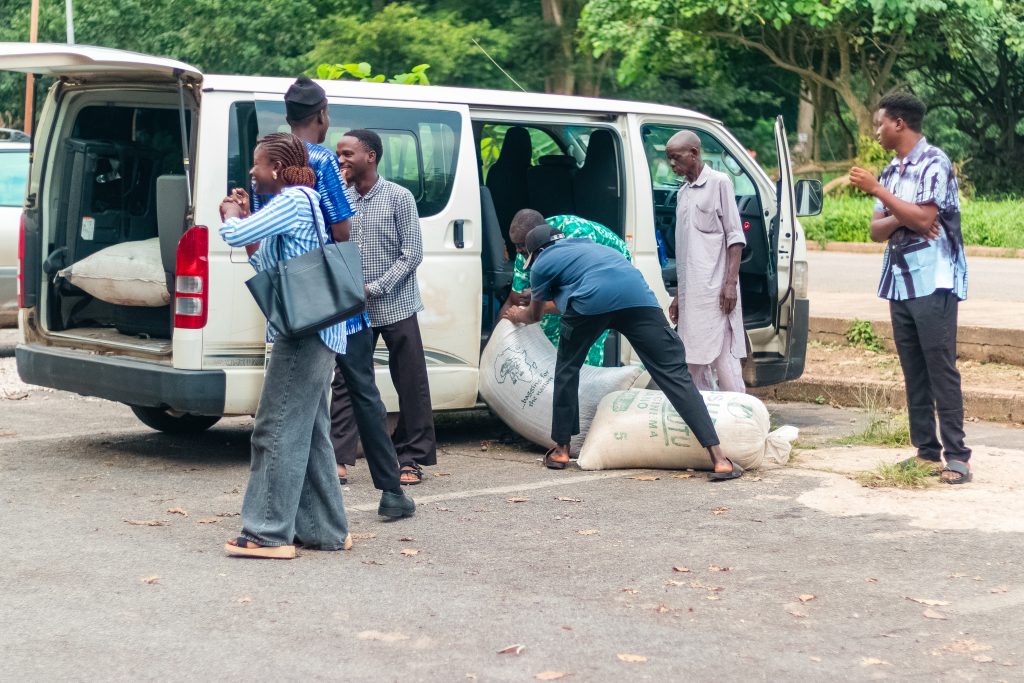
A disturbing report that some university students were sitting for examinations without being able to afford regular meals prompted Arc. Oyegoke Akinrinola Omigbodun to provide food items to the affected students on 21 August 2026.
According to information supplied by his campaign, Omigbodun, who is campaigning for the Osun Central Senate seat ahead of the 2027 general election, described the discovery as a troubling reflection of the economic hardship confronting many Nigerian families. For parents already struggling with tuition, accommodation, transportation, textbooks and other educational expenses, the rising cost of food has created an additional burden that increasingly follows their children onto university campuses.
Although the intervention offered immediate relief, it also drew attention to a deeper problem: students cannot benefit fully from education when hunger compromises their health, concentration and academic performance. A 2019 peer-reviewed survey involving 398 students at two universities in South-East Nigeria found an overall food-insecurity rate of 80.7 per cent. While the study was not nationally representative, its findings demonstrate that inadequate access to food among undergraduates is neither imaginary nor insignificant. The researchers associated the problem with students’ allowances, food expenditure and sources of income.
The wider national situation makes the students’ experience even more concerning. The World Food Programme reports that about 35 million Nigerians are facing acute food insecurity in 2026, driven by economic pressure, conflict, displacement and disruption to local food systems. At the same time, UNICEF reported in 2026 that more than 10 million Nigerian children of primary-school age remain out of school, while only one in four children can read at a basic level.
These figures reveal interconnected crises of access, learning, affordability and student welfare. Nigeria is not only struggling to bring children into classrooms; the country is also struggling to ensure that those who enter school receive quality education and possess the basic welfare support required to complete it successfully.
Responding to the students’ circumstances, Omigbodun argued that Nigeria must treat education as a national development obligation rather than a privilege determined by family income. He connected the intervention with the restructuring agenda of his senatorial campaign, saying he would support legislative action to strengthen the government’s responsibility to provide accessible and quality education.
The relevant constitutional provision is Section 18 of Chapter II of the 1999 Constitution, not Article 11(3). Section 18(1) directs government policy towards equal and adequate educational opportunities at all levels. Section 18(3) states that government shall strive to eradicate illiteracy and, “as and when practicable,” provide free primary, secondary and university education, as well as adult literacy programmes. Omigbodun’s stated objective is to support the removal of the discretionary limitation represented by the phrase “as and when practicable” and pursue a stronger, enforceable public responsibility for quality education.
Omigbodun’s public engagement with education predates his present senatorial campaign. Independent reports identify him as an architect, estate surveyor, teacher and educationist. He previously contested the 2022 Osun State governorship election on the platform of the Social Democratic Party. He studied Architecture at the University of Ife, now Obafemi Awolowo University.
As Chairman of the Nigerian Institute of Architects in Osun State, Omigbodun also participated in a student architecture competition and publicly encouraged young architects to conduct more research and develop their professional capabilities. During the 2022 governorship debate, Africa Check examined one of his claims concerning out-of-school children in Osun State and rated it correct, indicating an established interest in education data and policy.
His campaign further states that he has personally supported more than 15 young people through university by paying their tuition, provided scholarships for more than 150 children from economically disadvantaged families, and created employment opportunities for over 200 young people through his educational institution and other businesses. It says more than 45 employees currently work in establishments associated with him, most of which are located in Osogbo and other parts of Osun State.
Providing food during examinations cannot, by itself, resolve Nigeria’s education crisis. It does, however, demonstrate an understanding that education policy must consider the complete welfare of the student. Sustainable progress will require properly funded institutions, qualified and motivated teachers, modern laboratories and libraries, research grants, affordable student accommodation, targeted hardship support and a stable economy that enables parents to educate their children without falling into poverty.
The enduring significance of Omigbodun’s intervention will therefore depend on whether this immediate act of assistance develops into a detailed and financially realistic legislative programme. The food items may meet a temporary need, but the larger challenge is to build an education system in which no Nigerian student is forced to choose between preparing for an examination and finding the next meal.